01What actually builds up inside a flue
Smoke leaves behind creosote as it cools on its way up — a tar-like coating that sticks to the inside walls of the liner.
Continue reading
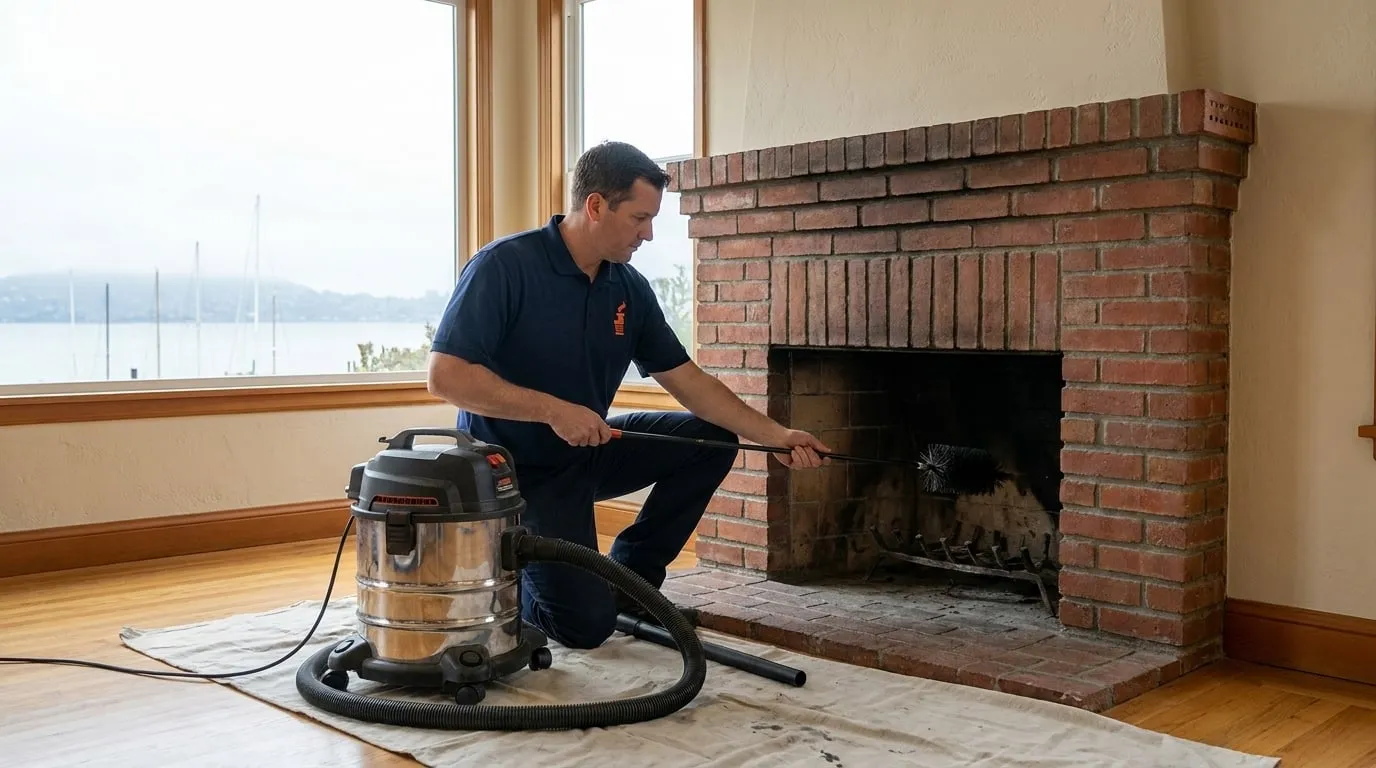
A thin layer is nothing to worry about. What is a concern is what a season or two of occasional fires can leave behind: enough of that residue sitting inside the chimney to reach a temperature at which it can catch on its own. Sweeping is the mechanical fix — a brush cut to match the liner’s diameter travels its full length, top to bottom, breaking that buildup free so it can be pulled out with a vacuum instead of sitting there accumulating visit after visit.
Because Marin’s climate stays mild, plenty of local fireplaces get used in bursts through the cooler months rather than burned nightly the way a wood stove elsewhere might be, and that stop-start pattern makes it easy to lose track of how long it has actually been since the last sweep. Creosote does not care whether the fires were daily or occasional — given enough time either way, it reaches a dangerous level, and an annual check is really the only way to know for certain where a given flue stands.